
How to Build a Consistent Workout Logging Habit That Sticks
Many lifters start a new fitness program with great enthusiasm, meticulously writing down warm-up reps, heart rate, and stretching routines. Yet within three weeks, their workout log is abandoned.
Why does this happen? The primary reason is logging friction. If logging a set requires navigating through multiple menus, waiting for slow internet connections, or typing long notes while gasping for air, you will inevitably stop doing it.
Here are four evidence-based strategies to build a permanent workout logging habit that takes less than five seconds per set.
1. Lower the Activation Energy
In behavioral psychology, the likelihood of completing an action depends inversely on the friction required to start it.
If your workout app demands that you:
- Connect to gym Wi-Fi
- Log in with an email and password
- Close pop-up ads or social community feeds
- Search through a clunky 10-level hierarchy
…you have created substantial cognitive resistance before you even complete your first warm-up set.
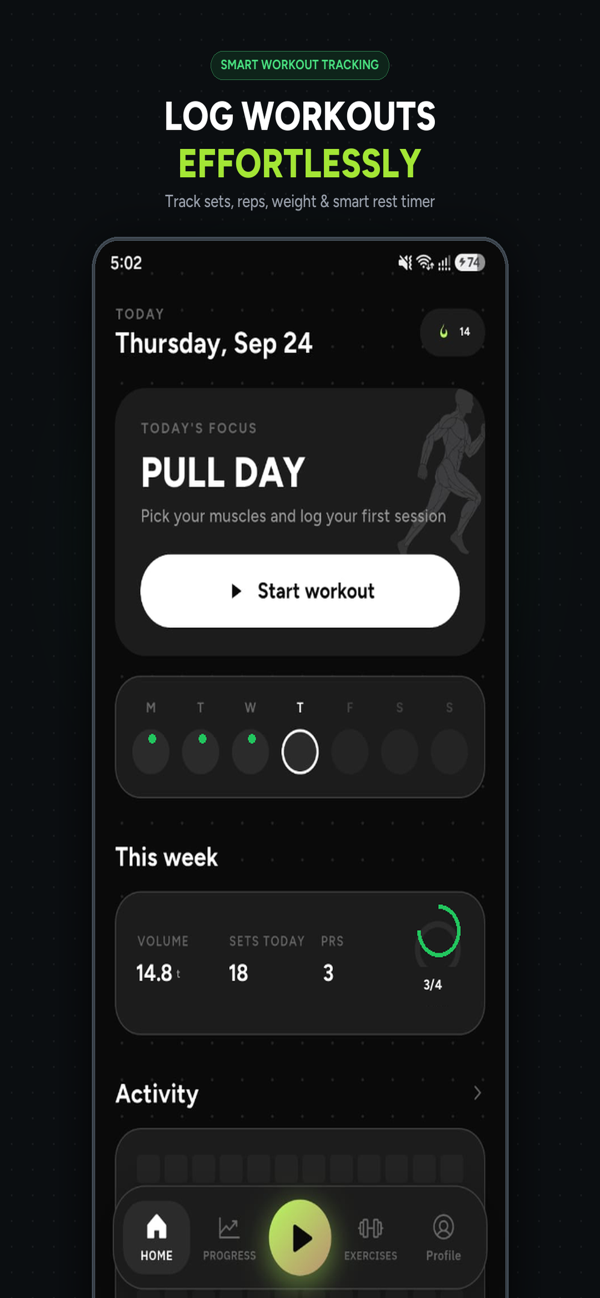
With a local-first application like GF Track, there is zero sign-in barrier. You launch the app from your home screen, tap your scheduled routine (e.g. “Pull Day”), and you are immediately on the active logging screen.
2. Anchor the Habit to a Physical Cue
Habits stick fastest when they are “anchored” to a physical event that occurs consistently.
In strength training, the most reliable anchor is the racking of the barbell or dumbbells.
Make a personal rule: The moment I re-rack the weights, I pick up my phone, tap the completed checkmark, and start the rest countdown.
Because you are resting anyway, logging does not consume any extra gym time. It simply fills the initial 5 seconds of your rest interval with focused data entry.
3. Focus on Minimum Viable Data
Do not burden your log with metrics that provide zero decision-making value. You do not need to record the room temperature, the playlist you listened to, or the color of your gym shoes.
Stick strictly to what matters:
- Did you complete the target reps?
- What was the load on the bar?
- What was the approximate RPE?
Capturing these three numbers takes a single glance and two taps on your screen.
4. Leverage Visual Milestones & Consistency Streaks
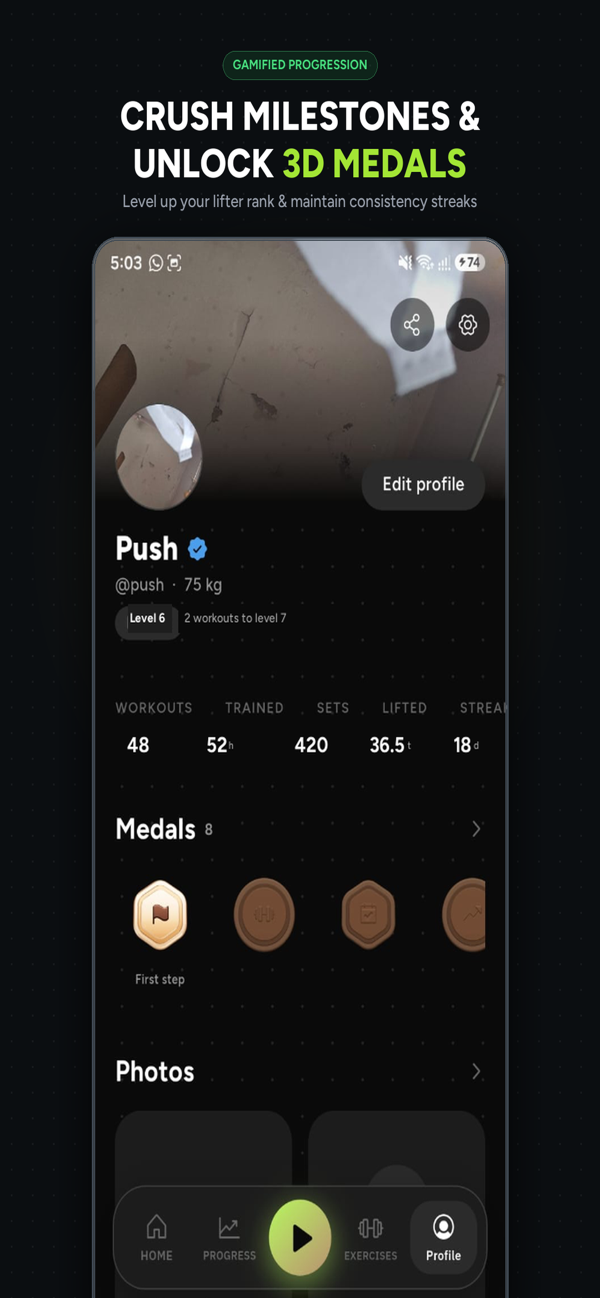
Humans respond powerfully to visible streaks and progress markers. Seeing that you have completed 18 consecutive workouts without missing a scheduled session provides psychological momentum to protect the streak.
In GF Track, your profile awards 3D Medals for hitting workout milestones and tracks your consistency streaks automatically. When motivation wavers on a rainy evening, the desire to maintain your streak and advance your lifter rank serves as an immediate behavioral anchor.
Treat your workout log not as homework, but as an objective instrument of your physical progression.
Track these metrics in GF Track
Log sets, reps, and RPE with automated countdown rest timers and full on-device privacy.
Related Strength Guides
Why Pen and Paper Workout Logs Fail (And What to Use Instead)
A comparison between physical fitness notebooks and dedicated workout tracking apps: speed, history recall, plate calculators, and habit adherence.
How to Structure a Push Pull Legs (PPL) Split for Maximum Strength & Size
A complete programming guide to organizing Push, Pull, and Leg workouts, exercise selection, weekly frequency, and volume balance.
How to Track Progressive Overload in Strength Training
A practical breakdown of progressive overload: understanding weight, volume, mechanical tension, and how to track strength progress over time.