
How to Structure a Push Pull Legs (PPL) Split for Maximum Strength & Size
The Push / Pull / Legs (PPL) workout split remains the gold standard for intermediate and advanced lifters. By grouping muscles based on movement mechanics rather than arbitrary anatomical categories, PPL allows you to train related muscle groups in harmony while giving opposing muscle groups ample recovery time.
1. The Anatomy of Push, Pull, Legs
The Push Day
Targets muscles responsible for pushing resistance away from the torso:
- Chest (Pectoralis Major & Minor)
- Front and Side Deltoids (Shoulders)
- Triceps Brachii
The Pull Day
Targets muscles responsible for pulling resistance toward the torso:
- Lats, Traps, and Rhomboids (Upper and Mid Back)
- Rear Deltoids
- Biceps and Forearms
- Erector Spinae
The Leg Day
Targets the entire lower body musculature:
- Quadriceps (Knee extension)
- Hamstrings (Hip extension & Knee flexion)
- Glutes & Calves
2. Choosing Your Weekly Frequency: 3-Day vs. 6-Day PPL
Depending on your recovery ability, work schedule, and training experience, PPL can be configured in two primary formats:
The 3-Day PPL (Ideal for Busy Lifters & Beginners)
- Monday: Push
- Wednesday: Pull
- Friday: Legs
- Rest on Tuesday, Thursday, Saturday, Sunday. Each muscle group receives high volume once every 7 days with massive systemic recovery between bouts.
The 6-Day PPL (Ideal for Intermediates & Hypertrophy)
- Day 1: Push A
- Day 2: Pull A
- Day 3: Legs A
- Day 4: Push B
- Day 5: Pull B
- Day 6: Legs B
- Day 7: Rest This allows each muscle group to be stimulated twice per week with 72 hours of recovery between sessions.
3. Sample 6-Day PPL Exercise Selection
In GF Track, you can configure two variations of each day (A and B) to hit different movement planes and joint angles:
Push A (Chest Focused)
- Barbell Bench Press: 3 sets × 6–8 reps
- Standing Overhead Press: 3 sets × 8–10 reps
- Incline Dumbbell Press: 3 sets × 10–12 reps
- Dumbbell Lateral Raises: 4 sets × 12–15 reps
- Tricep Rope Pushdowns: 3 sets × 10–12 reps
- Overhead Tricep Cable Extension: 3 sets × 12–15 reps
Pull A (Vertical Pull & Upper Back)
- Conventional Deadlift or Barbell Row: 3 sets × 6–8 reps
- Weighted Pull-ups or Lat Pulldowns: 3 sets × 8–10 reps
- Chest-Supported Row: 3 sets × 10–12 reps
- Face Pulls: 4 sets × 15–20 reps
- Incline Dumbbell Bicep Curls: 3 sets × 10–12 reps
- Hammer Curls: 3 sets × 10–12 reps
Legs A (Quad Focused)
- Barbell Back Squat: 3 sets × 6–8 reps
- Romanian Deadlift (RDL): 3 sets × 8–10 reps
- Leg Press: 3 sets × 10–12 reps
- Seated Leg Curls: 3 sets × 12–15 reps
- Standing Calf Raises: 4 sets × 12–15 reps
- Hanging Leg Raises: 3 sets × 15 reps
4. Organizing Your PPL Routines in GF Track
Save these days as distinct routine templates in GF Track. When you enter the gym on Monday, simply select Push A and start training. Your exercises, target sets, and previously lifted loads will load instantly, letting you execute with surgical precision.
Track these metrics in GF Track
Log sets, reps, and RPE with automated countdown rest timers and full on-device privacy.
Related Strength Guides
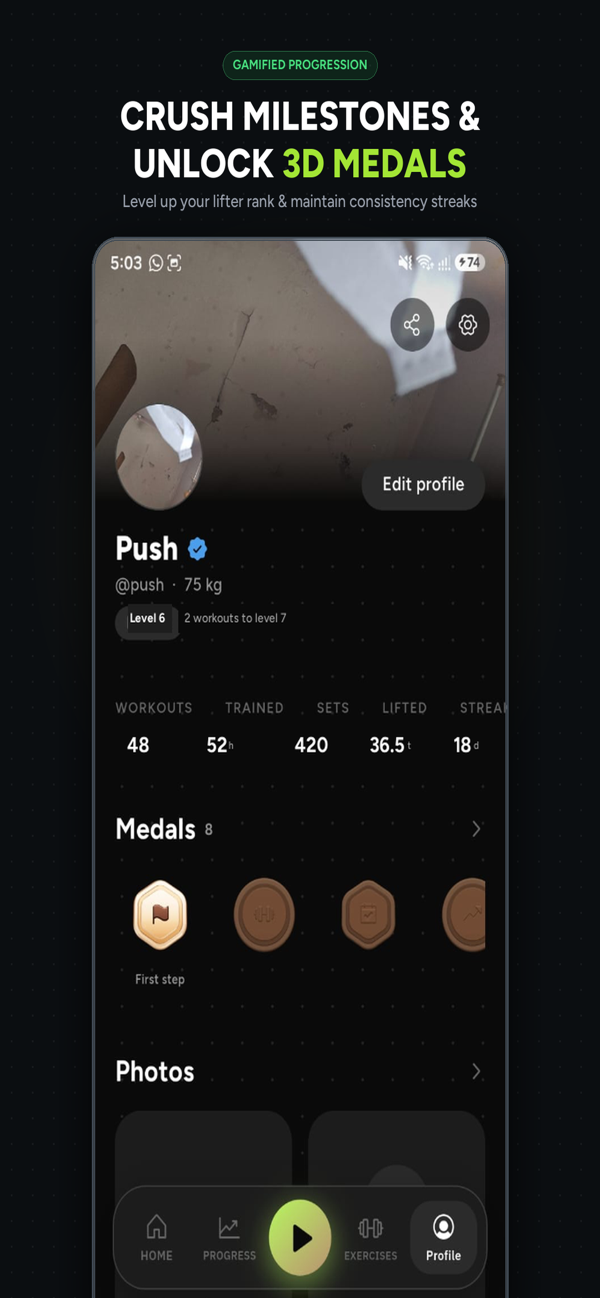
How to Build a Consistent Workout Logging Habit That Sticks
Why most lifters abandon their workout logs after three weeks, and the simple behavioral strategies to make gym tracking effortless and permanent.
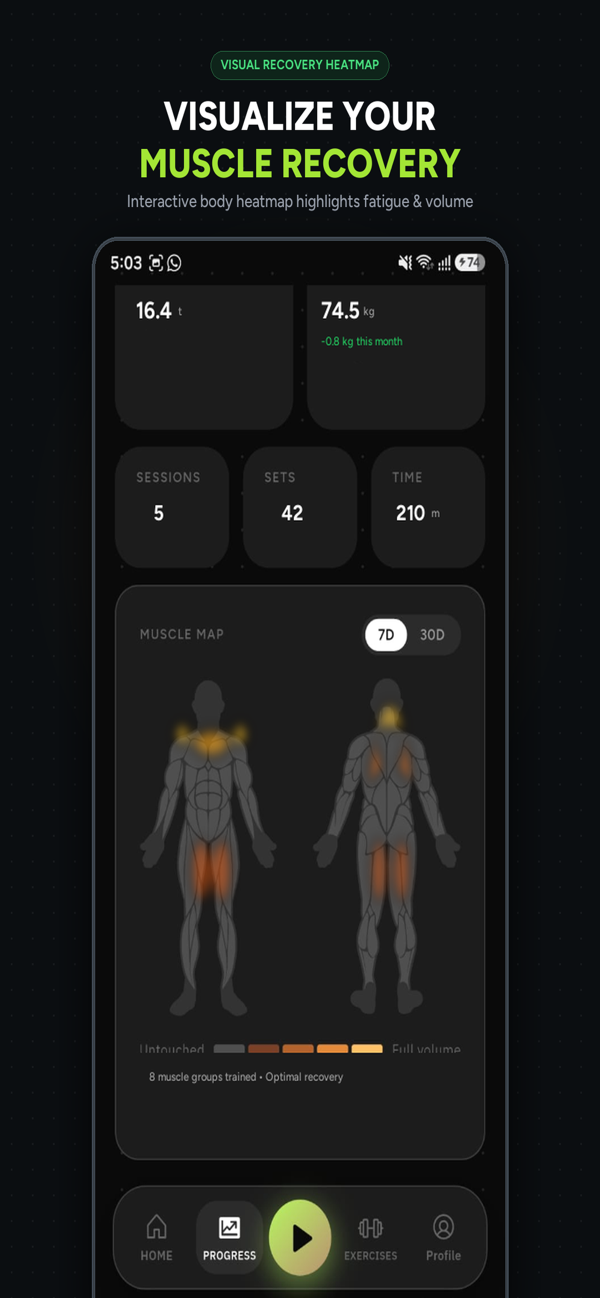
How to Track Progressive Overload in Strength Training
A practical breakdown of progressive overload: understanding weight, volume, mechanical tension, and how to track strength progress over time.
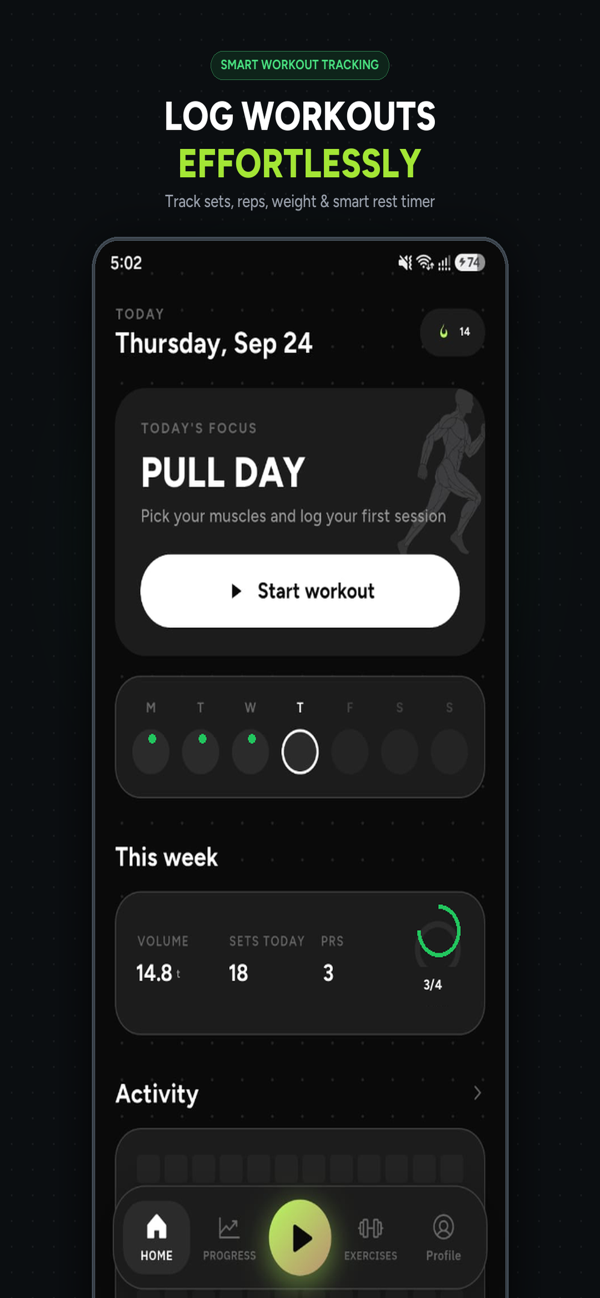
How to Track Your Gym Workouts Properly: A Guide for Lifters
Learn how to record sets, reps, weight, RPE, and rest intervals properly so your workout logs actually drive strength and hypertrophy progression.