
Why Pen and Paper Workout Logs Fail (And What to Use Instead)
For decades, bodybuilding lore has championed the beat-up spiral notebook carried onto the gym floor with a pen.
While writing down your sets on paper is vastly better than tracking nothing at all, physical notebooks present severe friction points that eventually cause most modern lifters to abandon logging altogether.
Here is why paper workout journals fail, and why a minimalist, local-first mobile tracker delivers far superior results.
1. The Physical Inconvenience of Carrying a Notebook
In modern gym environments, space is limited. Carrying a notebook, a pen, water bottle, weightlifting belt, and lifting straps means juggling multiple items from station to station.
Pens run out of ink, get lost between benches, or rip through sweat-dampened pages. In contrast, your smartphone is already in your pocket or used for your gym music. Consolidating your workout log onto the device you already carry eliminates extra clutter entirely.
2. Impossible History Recall
The greatest flaw of a paper journal is the difficulty of retrieving past data:
- What did you incline press 6 weeks ago?
- What was your personal record on Romanian Deadlifts when you last ran this split?
- How much total volume have your hamstrings absorbed over the last month?
Answering these questions in a paper log requires flipping through dozens of dog-eared, sweat-stained pages while the clock ticks on your rest period.
With GF Track, your previous numbers for the current exercise automatically appear directly above your input fields the instant you select the movement.
3. No Automated Rest Intervals
One of the most important factors in training quality is rest interval consistency. A notebook cannot alert you when 2 minutes have elapsed.
Without a countdown timer, lifters either rest too little (impairing power output on the subsequent set) or get distracted by conversations and social feeds (spending 25 minutes on three sets). A digital tracker triggers discrete vibration notifications the exact moment your rest interval ends.
4. Why Most “Modern Apps” Also Fail
If paper logs have drawbacks, why do so many lifters abandon workout tracking apps?
Because most apps try to become social media platforms:
- They require creating an account with email and password verification.
- They push community feeds, friend requests, and influencer stories.
- They lock basic features (like routine templates or rest timers) behind recurring monthly subscriptions.
- They fail to function when you enter a basement gym with zero cellular reception.
5. The Solution: Local-First, Zero-Friction Logging
The ideal workout tracker combines the tactile, private speed of a notebook with the automated power of software.
GF Track was designed around this philosophy:
- No Account Required: Open the app and lift immediately.
- 100% Offline Storage: Works in deep gym basements with zero connection.
- Instant Recall: See your last load and reps right on the active screen.
- Complete Ownership: Export and import full data backups whenever you wish.
Leave the spiral notebook at home, skip the bloated fitness social networks, and track your workouts with the speed and privacy your training deserves.
Track these metrics in GF Track
Log sets, reps, and RPE with automated countdown rest timers and full on-device privacy.
Related Strength Guides
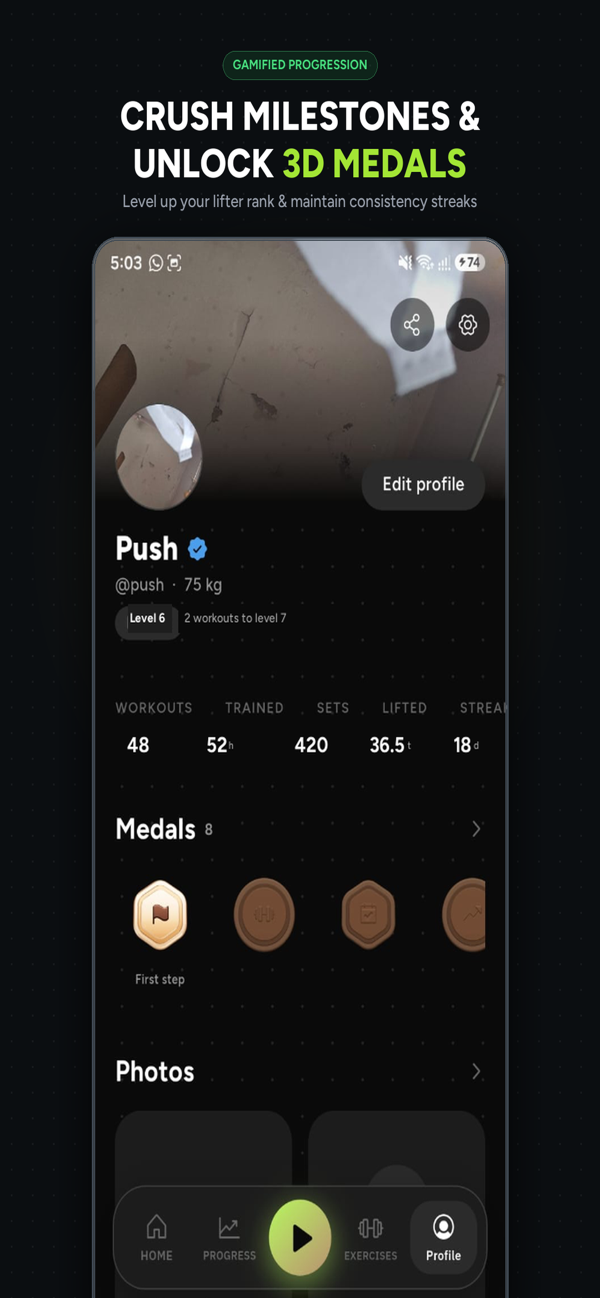
How to Build a Consistent Workout Logging Habit That Sticks
Why most lifters abandon their workout logs after three weeks, and the simple behavioral strategies to make gym tracking effortless and permanent.
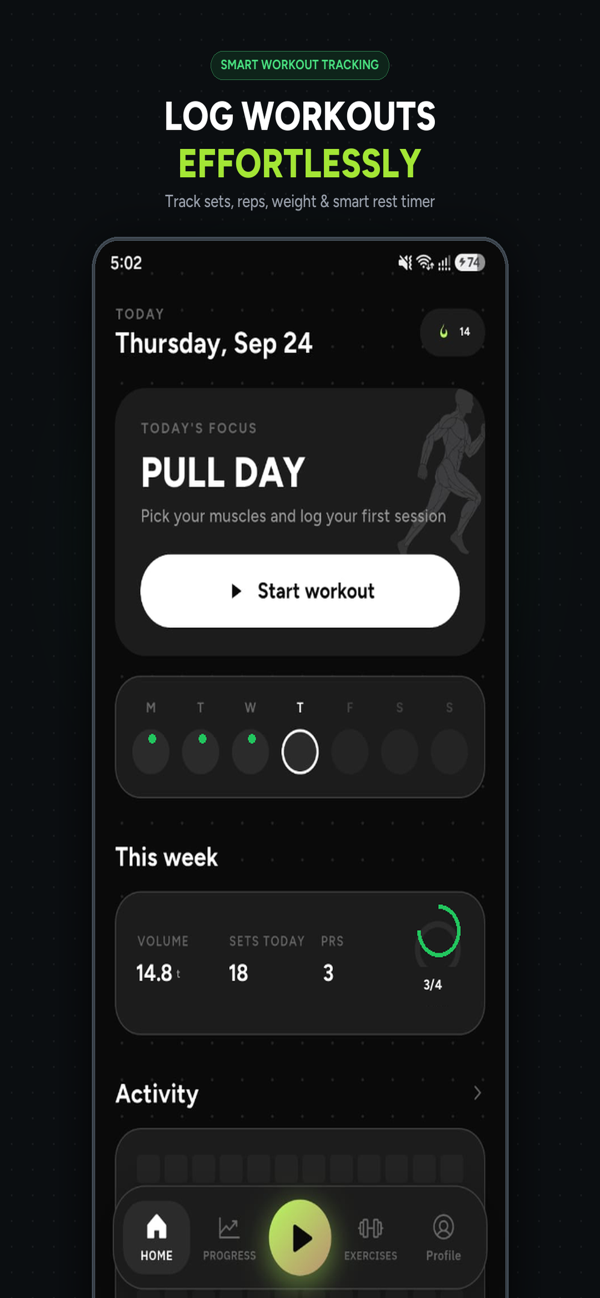
How to Structure a Push Pull Legs (PPL) Split for Maximum Strength & Size
A complete programming guide to organizing Push, Pull, and Leg workouts, exercise selection, weekly frequency, and volume balance.
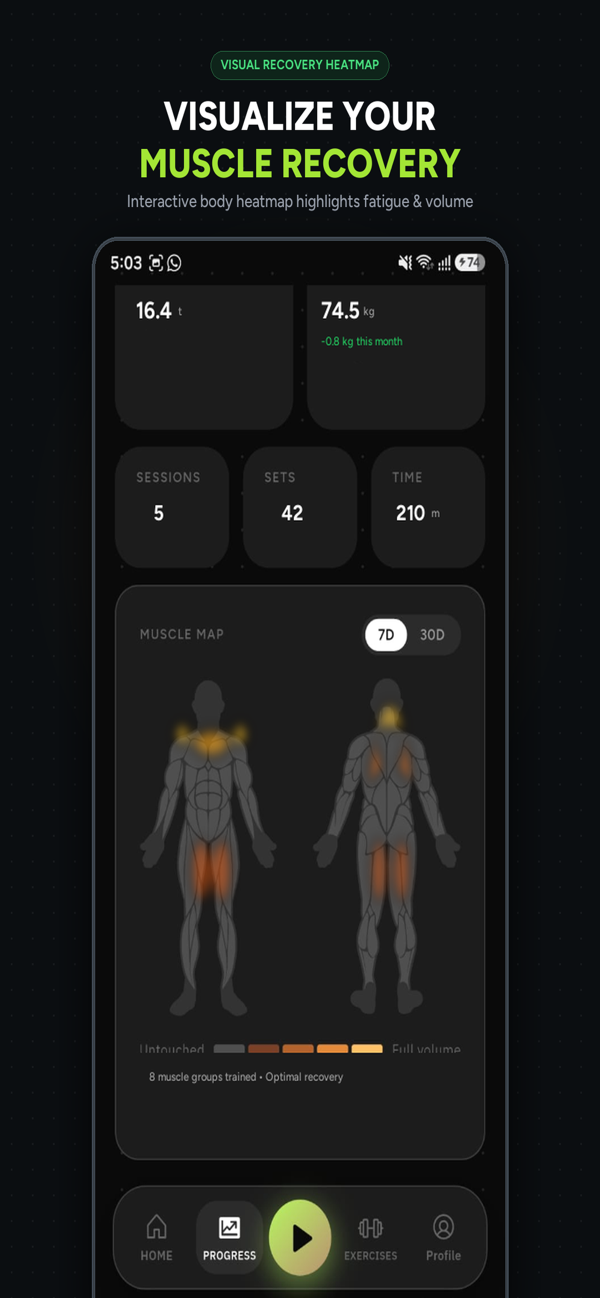
How to Track Progressive Overload in Strength Training
A practical breakdown of progressive overload: understanding weight, volume, mechanical tension, and how to track strength progress over time.