
Barbell Plate Math & Warm-Up Sets: How to Warm Up for Heavy Lifts
Jumping straight from cold muscles into a heavy working set of squats or bench press is an invitation to injury, poor motor unit recruitment, and disappointing numbers.
Conversely, doing 8 excessive warm-up sets of 15 reps burns glycogen, builds metabolic fatigue, and exhausts your muscles before you even touch your working load.
Here is the exact formula for warming up efficiently, accompanied by the simplest way to calculate barbell plate loading.
1. The Purpose of a Specific Barbell Warm-Up
A specific warm-up achieves three physiological objectives:
- Elevates Joint Temperature & Synovial Fluid: Lubricates cartilage in shoulders, hips, and knees.
- Neurological Priming: Rehearses the precise motor pattern and bar path with ascending resistance.
- Potentiates the Nervous System: Heavy singles or doubles prepare your brain to fire high-threshold motor units without producing metabolic acid accumulation.
2. The 5-Step Warm-Up Pyramid
Suppose your target working set today is 100kg for 3 sets of 5 reps on the Barbell Bench Press.
Here is how your warm-up sets should look:
- Set 1 (Empty Bar - 20kg): 10 reps (slow eccentric, stretch at chest, check setup)
- Set 2 (50% of working weight - 50kg): 5 reps (moderate speed)
- Set 3 (70% of working weight - 70kg): 3 reps (explosive concentric)
- Set 4 (85% of working weight - 85kg): 1–2 reps (heavy single to prime the nervous system)
- Set 5 (Working Weight - 100kg): 3 sets × 5 reps (Work sets begin!)
Notice how the repetitions drop sharply as the weight increases. You are grooving the movement and preparing the nervous system, not doing cardio.
3. How to Avoid Plate Loading Errors
Barbell loading errors are remarkably common on the gym floor:
- Mixing 15kg and 20kg plates that look identical from the side.
- Loading 115kg when you intended 110kg due to mental math slip-ups between sets.
- Forgetting that the barbell itself weighs 20kg (or 15kg for a women’s bar).
The Simple Barbell Plate Formula:
$$\text{Weight Per Sleeve} = \frac{\text{Target Total Weight} - \text{Barbell Weight}}{2}$$
For a target of 140kg with a standard 20kg bar:
$$\frac{140 - 20}{2} = 60\text{kg on each sleeve}$$
Which means: 2 × 25kg + 1 × 10kg per side.
4. Let GF Track Calculate the Discs
Rather than doing mental division while recovering from a tough set of squats, use the Barbell Plate Calculator built directly into GF Track.
Select your target weight and bar specification. The app visually renders the discs on the sleeve so you can load your barbell with total confidence and zero delays.
Track these metrics in GF Track
Log sets, reps, and RPE with automated countdown rest timers and full on-device privacy.
Related Strength Guides
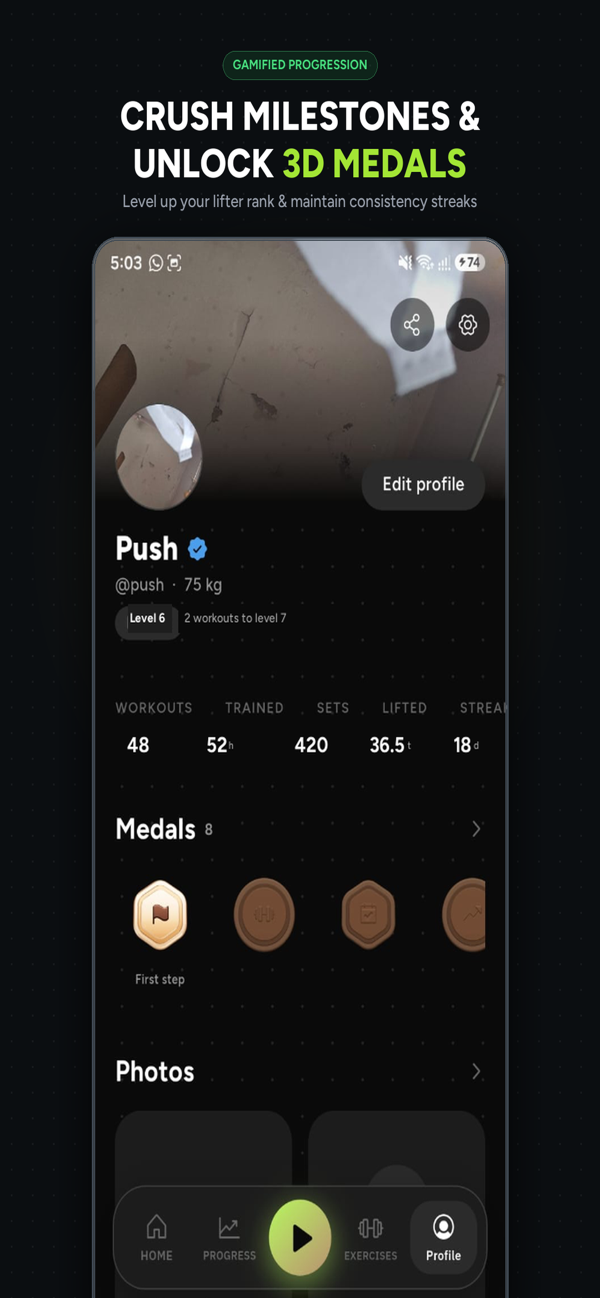
How to Build a Consistent Workout Logging Habit That Sticks
Why most lifters abandon their workout logs after three weeks, and the simple behavioral strategies to make gym tracking effortless and permanent.
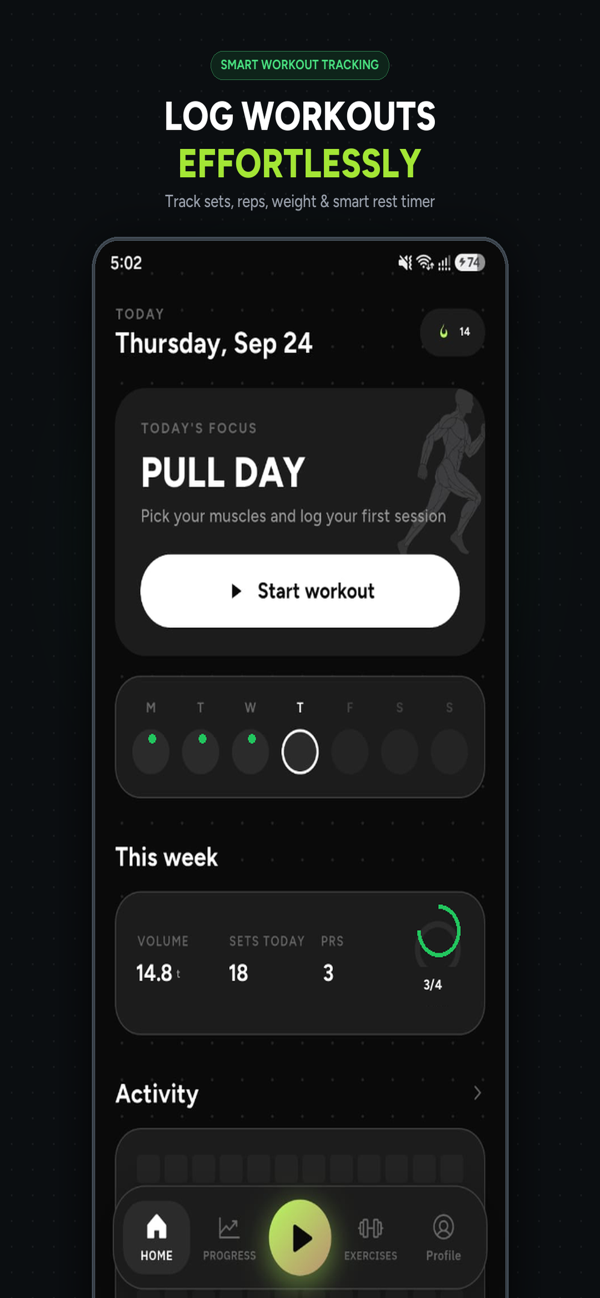
How to Structure a Push Pull Legs (PPL) Split for Maximum Strength & Size
A complete programming guide to organizing Push, Pull, and Leg workouts, exercise selection, weekly frequency, and volume balance.
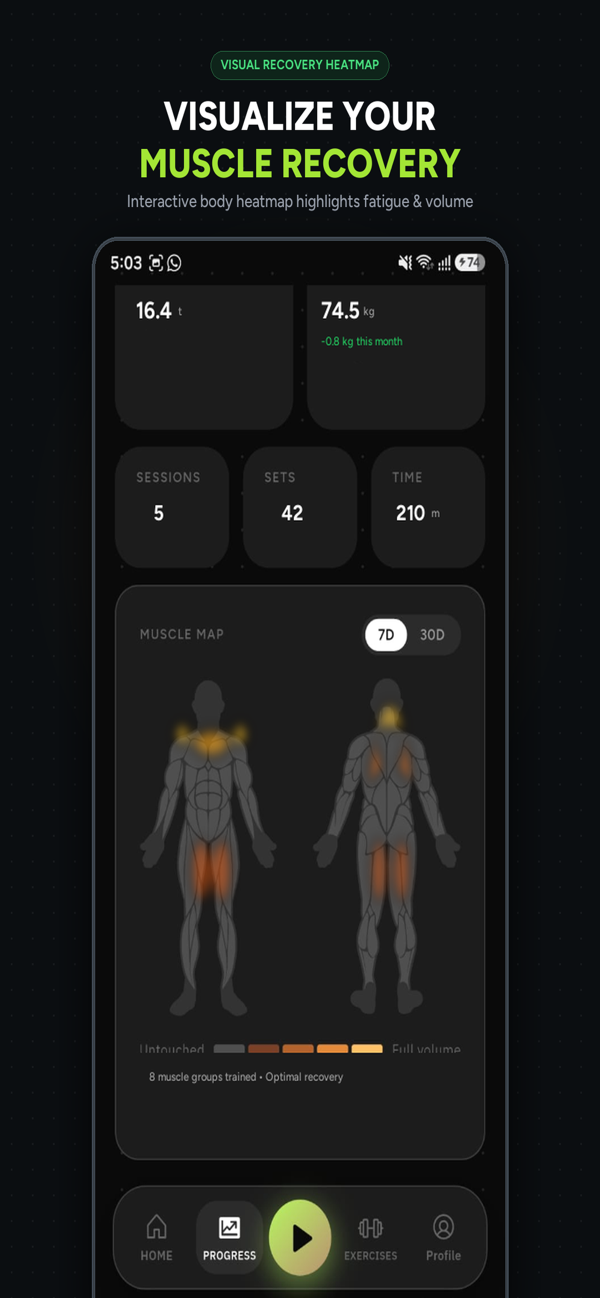
How to Track Progressive Overload in Strength Training
A practical breakdown of progressive overload: understanding weight, volume, mechanical tension, and how to track strength progress over time.